

Aimee Mann – 'Wise Up'
Down Beats Song #6 - (Magnolia: Music from the Motion Picture: 1999)

NB: This essay contains spoilers for Paul Thomas Anderson’s 1999 masterpiece, Magnolia. The film is by now 25 years old, so I feel a little less guilty. But if any reader wishes to watch it before reading the essay, they are heartily encouraged to do so. Just don’t be so overwhelmed by its brilliance you forget to come back and read the essay!
Altman and Anderson
Time for the music writer to mix his media.
There was a lovely period in the late ‘90s when not only was America’s finest filmmaker, Robert Altman, still making good, albeit lesser, movies, but his hand-picked heir was coming into his own as Hollywood’s fin de siècle prodigy.
If Paul Thomas Anderson had shown promise with his nearly-studio-butchered debut, Hard 8, it was 1997’s Boogie Nights which properly heralded a bold and truly original new talent.
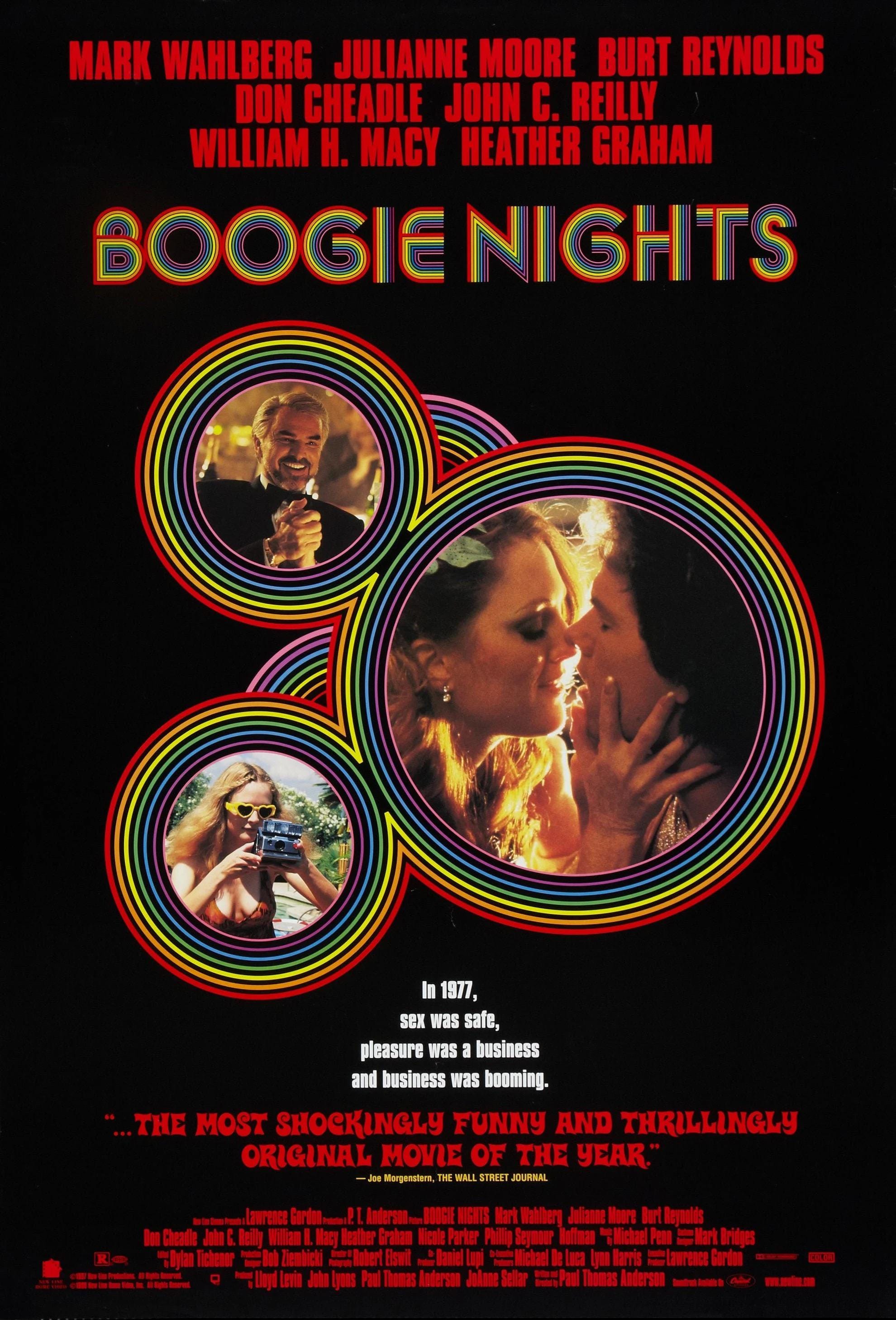
Anderson was open in acknowledging that his own first masterpiece owed much to Altman’s greatest film – 1975’s satire of the American grotesque, Nashville, to my mind as good an American movie as has ever been made. The overlapping, multi-tracked dialogue; the long tracks; the vast, multi-character sweep; the same cock-eyed-critical yet affectionate dissection of American culture.
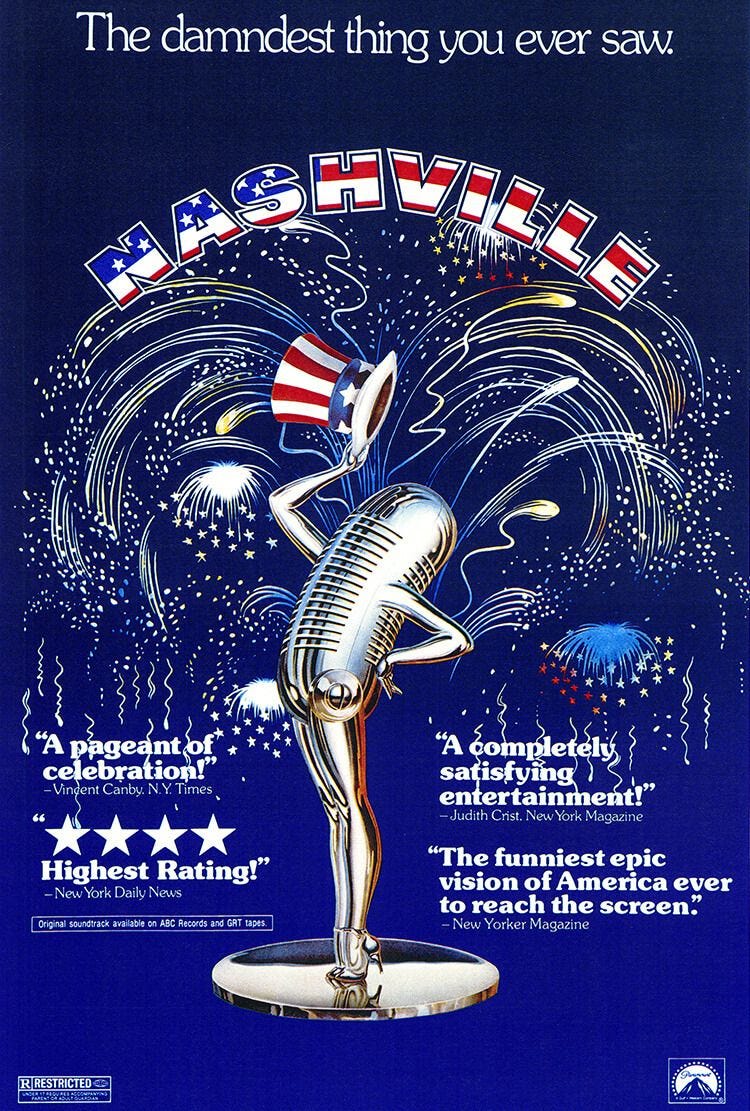
So too, did Anderson echo Altman’s youthful brash confidence and stubbornness of the early ‘70s. (Much as Elliott Gould and Donald Sutherland had tried to have Altman fired from M*A*S*H, so too had the outraged Burt Reynolds fumed at Anderson on the set of Boogie Nights.)
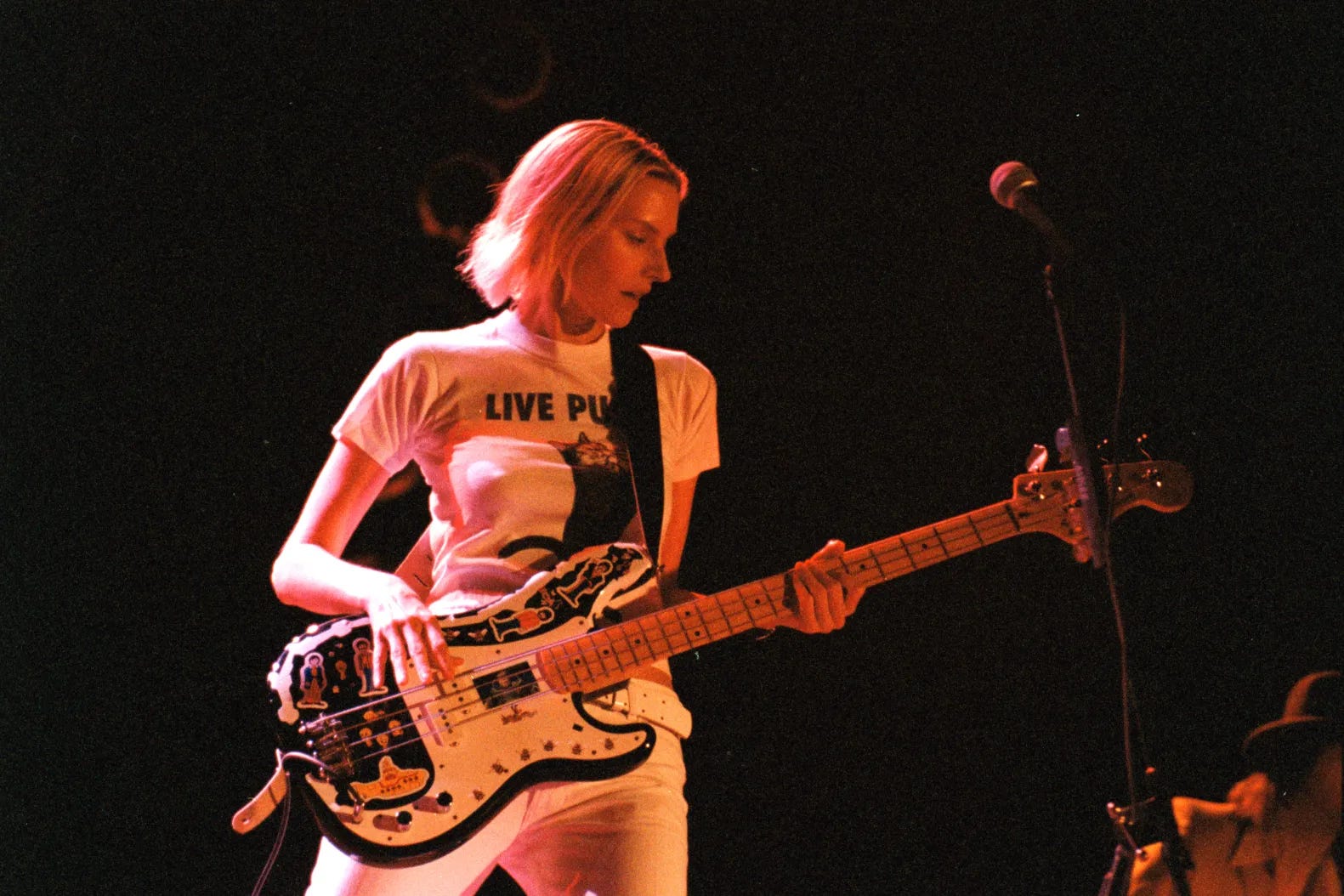
By 1999,1 Altman was making the slight but charming Cookie’s Fortune – he was two years away from his last truly great film, Gosford Park. Anderson, meanwhile, was about to prove that Boogie Nights was no fluke and that his native Los Angeles contained plenty of dramatically ripe misery beyond the bizarre confines of the porn industry. If he’d had been offered a freedom unusual for so young a director with Boogie Nights, its success afforded him an even rarer latitude for his next project. Enter Aimee Mann, a singer-songwriter he knew well from Largo, the LA club where his collaborator Jon Brion hosted regular nights.
Thank God for that snake
The story goes that Anderson was up at William H. Macy’s cabin working on the script for his Boogie Nights follow-up and was so terrified by a snake spotted outside that he locked himself in with nothing to do but work. What had started as an intimate, small-scale film2 had already snowballed in his head by the time he settled on framing the narrative and emotional thrust on various Mann demos, including songs from what would become her record Bachelor No. 2 or, the Last Remains of the Dodo.3 The resulting film would be Magnolia.
Anderson must certainly have also had Altman’s masterful 1993 Raymond Carver adaptation, Short Cuts, in mind, when he eventually set on tying Mann’s songs to a desire to make “the epic, the all-time great San Fernando Valley movie”. (“Boogie Nights and Magnolia are both fuck-you celebrations of the Valley,” Anderson said.) Although much more overtly tragic than the tragicomedy of Altman’s satire, the influence is again obvious.
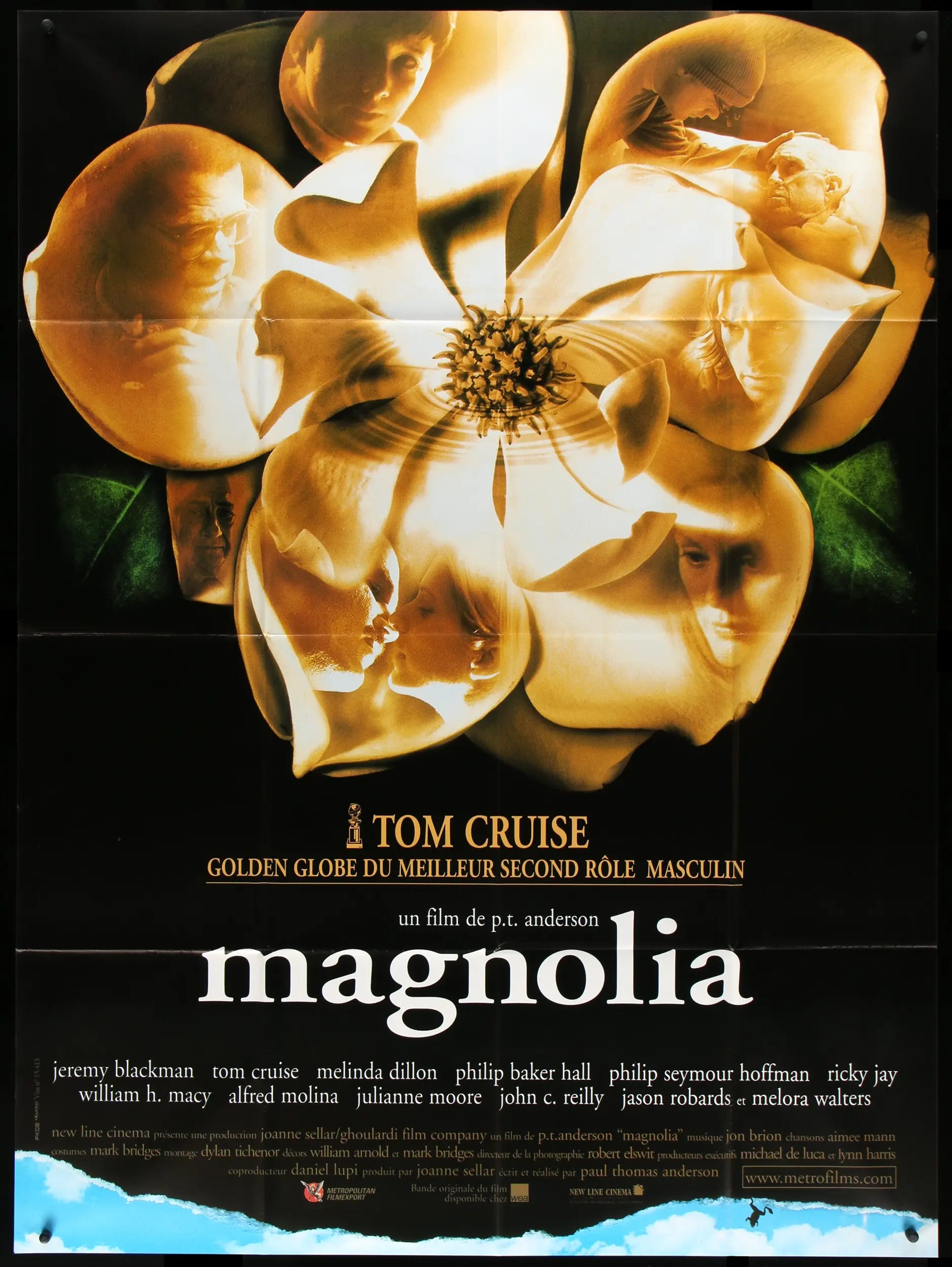
The film was critically divisive at the time, and still experiences the usual post-hoc snarky reassessments. I lay my cards on the table: I love Magnolia – this epic tale of an assorted ensemble of Angelenos united only in their misery and dysfunction – fervently. It is undoubtedly amongst my favourite movies.
I first saw it, as a student and an insufferable aspirant cineaste,4 at around the same time I first saw Alejandro Gonzalez Inarritu’s doomed-love and dogfighting epic, Amores Perros. The impact was the same with both: childhood and adolescent viewing had not prepared me for the fact that film could do this; could make me feel like this.
It’s enormous (even Anderson now thinks it 20 minutes too long) bravura filmmaking. Gloriously self indulgent, too; melodramatic, even. But I have never much understood why ‘self-indulgent’ must always be a pejorative. There is nothing wrong with indulging the self so long as it is not at others’ expense. Still less when all one is indulging is the full range of one’s ambition, talent, and fizzing energy; one’s wide interest in the human condition and one’s evident empathy. If there were a ten-hour cut, I’d watch it.
I understand that perhaps the histrionic suffering of an all-white gang in the City of Angels is perhaps not the most representative survey of late-century American misery. But then I am a histrionic, sadsack whiteboy; still worse, a limey on whom the grip of that mad city in which I have never set foot exercises an enormous pull.
Tom Cruise anticipates Andrew Tate and our present misfortune
I will have course to dwell just a little on the characters when discussing the song, but I also want to flag up one particular storyline here as being particularly relevant for re-watchers or first-time viewers.
Even those who disparaged Magnolia at the time were forced to acknowledge that Tom Cruise’s reptilian ‘manosphere’ guru Frank ‘TJ’ Mackie was a revelation. He is extraordinary and truly terrifying: if you think Cruise ‘just’ a ‘movie star’, watch it and stand corrected.
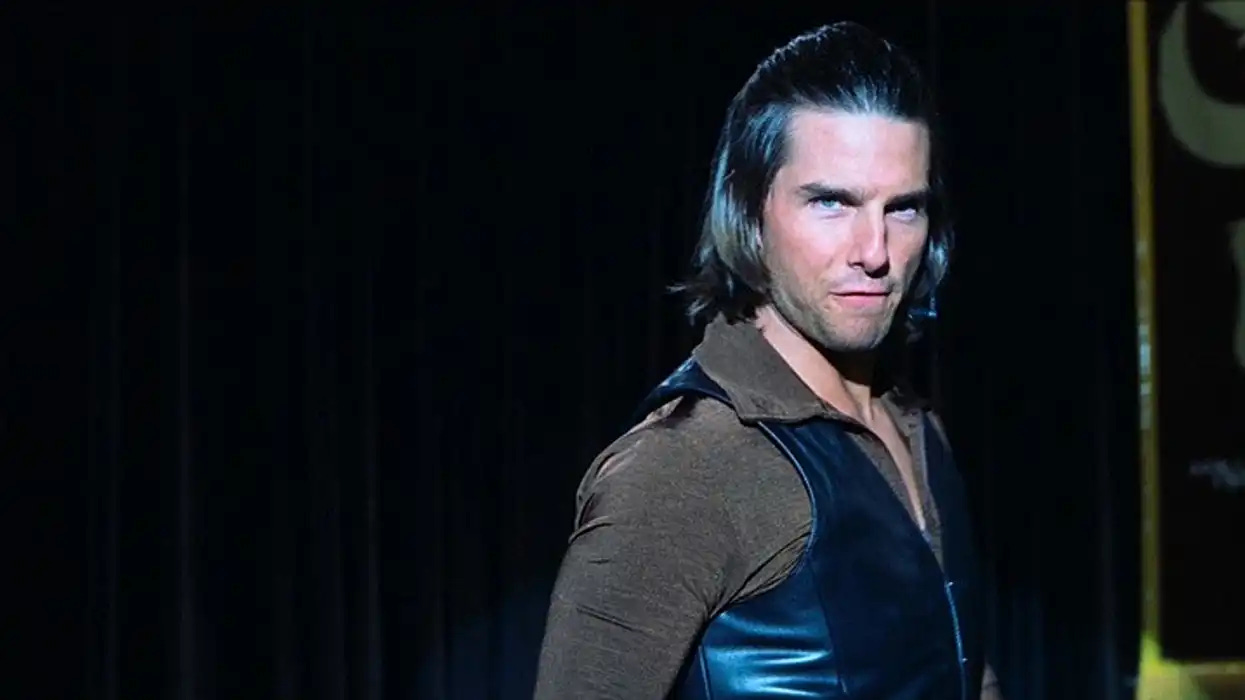
Viewed from the pitch-dark days of 2026 (what is the opposite of ‘halcyon’?), we might recall, soberingly, that we sleepwalked, rather than were cold-slapped, by the scale of the phenomena of Andrew Tate and Gen Z misogyny now facing us – easily as big and horrific a social evil as is currently befouling the western world, in case you hadn’t heard.5
Watched with the knowledge of how widespread this poison has become, the baying worship of Mackie’s packed hall full of loser followers is chilling in the extreme. And, much I might not wish to afford such pieces of shit the benefit of a Freudian analysis, Anderson is probably right in suggesting that, for many, deep pain underlies the pull. (This need not lead to exculpation: most of us manage to be in pain without treating it with woman-hating bile.)
Anderson’s audacity
The backlash to Magnolia, such as there was/is, rests largely on two instances of admittedly outrageously self-conscious directorial audacity. The first (second chronologically) is an explicit case of deus ex machina, in which God herself seems to decide our suffering characters have suffered enough, and literally rains frogs from the sky. The second is my favourite piece of filmic fourth-wall-breaking this side of Annie Hall.
We are well over two hours into Anderson’s rhapsody of angst. Mann’s plaintive piano delicately announces itself while, onscreen, Melora Walters’ cripplingly damaged Claudia snorts a line of coke, mingled with her tears. She whispers to herself “you’re so stupid”.6 Then, shockingly, since the song is clearly soundtrack and not ‘in-scene’ music, Claudia begins singing right along with Mann.
It’s not
What you thought
When you first began it
You got
What you want
Now you can hardly stand it though
By now you know
It’s not going to stop
It’s not going to stop
It’s not going to stop
‘Til you wise up
As the true emotional heart of our peerless ensemble, Claudia gets a whole verse (and part chorus) to herself, after which her would-be suitor, John C Reilly’s hapless cop Jim, comes in, singing beneath a wall-mounted crucifix.
Next comes Philip Baker Hall’s TV star Jimmy Gator, Claudia’s father and the film’s true villain: he gets just a few lines, not having earned more.
Then arrives William H Macy’s Donnie, a middle-aged man shrivelled by the damage of his early years as a TV quiz prodigy on Jimmy’s show. The (also wall-mounted) giant cheque he received in prize-money dwarfs and taunts his miserable, seated form.
Next, extra poignantly these days, are two of the finest actors of their or any other generations: Jason Robards – in his last film role – whose callous but remorseful Earl sings from his deathbed, despite apparent comatose; and Phil, his patient nurse, played, masterfully as always, by the great Philip Seymour Hoffman.
Then comes Earl’s would be-suicidally-overdosed wife, Julianne Moore, in her car.
Hot on her heels arrives Cruise, also car-bound, all simmering rage and wrath.
We, and the song, finish with Stanley, a child suffering exactly the same suffocating fate as Macy’s Donnie had two generations before.7
Characters singing along with the soundtrack? This was Anderson jumping the shark, moaned the naysayers. A piece of show-off post-modernity which undercut all the good stuff that came before it.
I get it, but differ wildly. I think it’s fabulous, and that the collective singalong renders these previously individual agonies communal, perhaps even millennial-zeitgeist. The late ‘90s may have been comparatively simpler times, but so much of our present malaise has surely blossomed from seeds planted in that already-late-stage-capitalist, sanguinely ‘End of History’ epoch.
When we recall that the audacious scene is preceded by an extraordinary near-ten minute monologue from Robards on the theme of regret, safe to say it’s a shattering cinematic quarter of an hour or so.
In praise of emotion
And ‘Wise Up’ is a gorgeous song: Mann at her most emotional meeting Anderson at his. As The Guardian’s John Patterson noted in a contemporaneous interview with the director, “Magnolia is hip enough, I suppose, but it’s also unabashedly, transcendently emotional, which is about as unhip as you’ll ever get in Los Angeles.” Yes, the wunderkind let it all hang out, and made himself vulnerable – ripe for ridicule even, in service of emotion.
So too is ‘Wise Up’ Mann at her most unabashedly open. Her reputation is for cool detachment – a trait once pounced upon by Robert Chistgau, in a truly hideous review. Her emotional reticence was given explicit voice on the hit single achieved by Mann’s first group ‘Til Tuesday, the 1985 new wave angst anthem ‘Voices Carry’. “Hush hush, keep it down now / Voices carry,” runs the chorus. It’s also clear, however, that this is an emotional abstinence imposed on the singer from outside, not one of choice.
Oh, he tells me tears are something to hide
And something to fear,
And I try so hard to keep it inside
So no one can hear
Mann shares with several of the Magnolia characters a traumatisingly dysfunctional childhood, and it seems it was her ‘60s upbringing which forced silence upon her. As she explained,
“The conventional wisdom was that women talked all the time, that they were bad drivers; that if they were unhappy in their marriage, it was because they didn’t accept literally what nature had destined them for. And so you can’t make a fucking mistake, because the mistake is going to be immediately attributed to your gender. They create a box and then put you in the box so that the box can control you. I think any woman my age is traumatised by growing up in the 60s and 70s because it was so relentless.”
Certainly the music industry in which Mann came up – and has it changed all that much? – had no idea how to handle a woman so defiantly rejecting both sexual objectification and banal genre labelling. She’s a singer-songwriter inspired less by Carol and Joni (although Mitchell is a fan) than by Costello8 and Nilsson (a debt she acknowledges with a decent cover of ‘One’ on Magnolia). And my word hasn’t she been ill-served. Despite the success of Magnolia, Geffen apparently told her the song collection contained no ‘hits’. She self-released Bachelor No. 2 or, the Last Remains of the Dodo, as she has most everything since.
One can hear the battle – between imposed emotional silence and the desire for something better – expressed in the other two Mann songs upon which Anderson drew most heavily in writing Magnolia. “Now that I’ve met you,” opens the exquisite ‘Deathly’,
Would you object to Never seeing each other again?
‘Cause I can’t afford to
Climb aboard you
No one’s got that much ego to spend
Anderson chose literally to put these words in the mouth of his heroine Claudia during her first date with the palpably decent and similarly vulnerable Jim. When you have been taught that you don’t matter, warmth and love are not to be trusted: “one act of kindness could be / Deathly”, in fact.
‘Save Me’, on the other hand, recognises – or starts to – that fences do not truly make good neighbours even for those crippled by the failings of formative influence. “If you could save me,” the singer begs,
From the ranks of the freaks
That suspect
They could never love anyone
Within this duality, ‘Wise Up’ itself plots a middle, rather purgatorial, course. What first appears to be a message of pulling-yourself-up-by-the-bootstraps self-help (“It’s not going to stop / ‘til you wise up”) is revealed, at the very end, to be almost the reverse. “It’s not going to stop / ‘til you wise up / so just give up”. This strikes me not as intended fatalism, but rather the kind of ‘acceptance’ of one’s baggage from which those such as Jon Kabat Zinn argue true healing comes.9
Anderson, I think – and despite the relentlessly luminous misery to which he has subjected us – concludes on the side of ‘Save Me’, and with cautious optimism. For the film ends with hope and with Claudia prepared, slowly, to let Jim in. With the last shot of the film, she cracks the first genuine smile in the three-hour running time.
She has survived, like Mann, and can move forward damaged but unbroken. She looks, to quote Tom Waits, as though, despite all the pain, she still just about believes there might be gold at the end of the world. Amen.
Postcript
‘Save Me’ was recognised by the 1999 Academy Awards with a nomination for Best Original Song. As with the great Elliott Smith a couple of years earlier, Mann at the Oscar’s was a curious sight: an ironist in a place utterly allergic to irony. The Academy’s stellar record for nonsense was maintained when it overlooked Mann for… Phil Collins and his theme song for the forgettable Disney cartoon Tarzan.
The rolling Down Beats playlist is available on both Spotify and Tidal here.
Footnotes (for the uber-nerds; they won’t be on the test)
The last year of the 20th century (unless Toby Ziegler is right) was a great twelve months for cinema. True, some mainstream films which at the time seemed bold and brilliant have aged poorly. While Toy Story 2 and Michael Mann’s The Insider remain great, I tried to re-watch Oliver Stone’s grid-iron Al Pacino vehicle Any Given Sunday recently and had to turn it off, such was the uncritical vileness of the machismo and the dizzying nausea of the cuts. American Beauty, similarly, looks like all kinds of smug, shallow cod-profundity viewed today. (Alan Ball would do much better on the small screen.) I never understood the fuss for either Fight Club or The Matrix, and The Sixth Sense represented the peak of M. Night Shymalan’s gimmicky abilities rather than heralding anything long-lasting. Mostly, a new generation of brash, cocky filmmakers, directly inspired by Hollywood’s true golden age – the 1970s – were announcing themselves. If Anderson was the brightest star, see also, for example, David O. Russell’s Three Kings (still his best film); Spike Jonze’s Being John Malkovich; Alexander Payne’s Election (still Reese Witherspoon’s best performance); Kimberley Peirce’s Boys Don’t Cry (which gave us warnings about the virulence of anti-trans violence we did precisely nothing to heed); Sofia Coppolla’s The Virgin Suicides; Mike Judge’s hysterical Office Space.
Anderson is perfectly capable of such restraint. See his exquisite drawing room psychodrama Phantom Thread, or the much earlier Punch-Drunk Love, the film which proved Adam Sandler could act.
Late ‘90s cinema was a good outlet for Mann. Also in 1999, she contributed the beautifully moody ‘You Could Make a Killing’ to Cruel Intentions, just the kind of titillating proto-adult schlock mid-teens like me lapped up with a spoon. ‘Wise Up’, too, had originally been written on request for former music journo Cameron Crowe and his smash Tom Cruise vehicle Jerry Maguire, but was never used, freeing Anderson to give it such central importance to Magnolia. So too was Mann’s on-screen career brief but iconic: she played the German nihilist who sacrificed a toe to the cause in the Coen Brothers’ classic The Big Lebowski. (I think I might have sacrificed an actual toe to have been in The Big Lebowski, a film which, measured in terms of laughs provoked per minute, is the funniest ever made.)
You know the sort of wanker I mean: the one who drops terms like ‘mise en scene’ in the union bar like he remotely understands what they mean.
My own thesis is that misogyny is the meta-evil from which all other Trumpian nightmares stem.
Have I dived too deep if I think this a reference to Mann’s ‘Stupid Thing’, perhaps my favourite song of hers, from her debut album?
A great child acting performance from Jeremy Blackman, who didn’t do much acting afterwards.
Mann and Costello have collaborated, and the latter included Mann’s solo debut Whatever on his excellent list of 500 records for Vanity Fair.
My apologies to Zinn if my passing acquaintance with his ideas has comoletely butchered them!
I absolutely love this article. I've been a big fan of Aimee Mann since her early days with 'Til Tuesday. Not only should "Save Me" have won the Oscar for best song that year, I think her song score for "Magnolia" should have won an Oscar too. I also liked the way you tied her Oscar loss to Elliot Smith's Oscar loss; I would also add Sufjan Stevens losing the Oscar for his wonderful song "Mystery of Love" from "Call Me By Your Name" to that list as well. Why can't the Academy appreciate beautifully crafted songs? Also, "Magnolia" is my favorite P.T. Anderson film and for years I've had to endure scorn when I shared this with my cinephile friends. I still don't understand the hate for this film (which also deserve a 4k Criterion release, in my opinion too).